.png)
Verbal children and teens with Autism Spectrum Disorder (ASD) often experience challenges with emotional regulation and communication that are not visibly apparent. Despite advancements in assistive technology, existing tools largely focus on nonverbal users or mirror neurotypical interaction models, creating a technology gap for an already overlooked population.
The objective was to rethink how assistive technology could better serve verbal children with ASD by reducing cognitive processing demands and encouraging more intuitive self-expression.
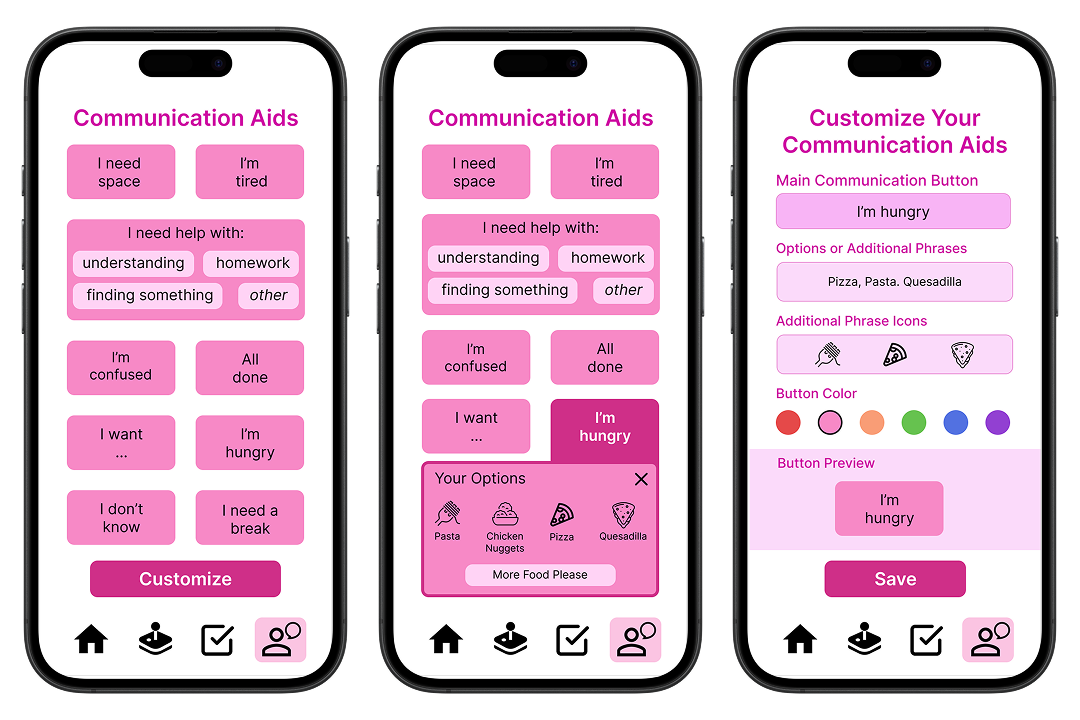
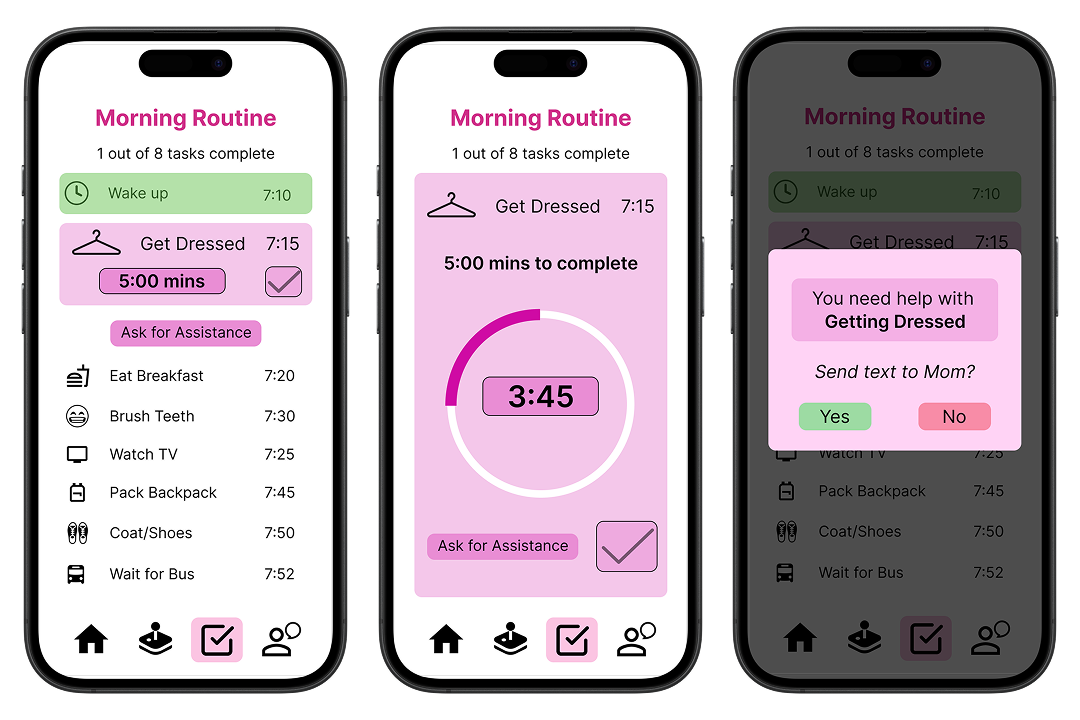
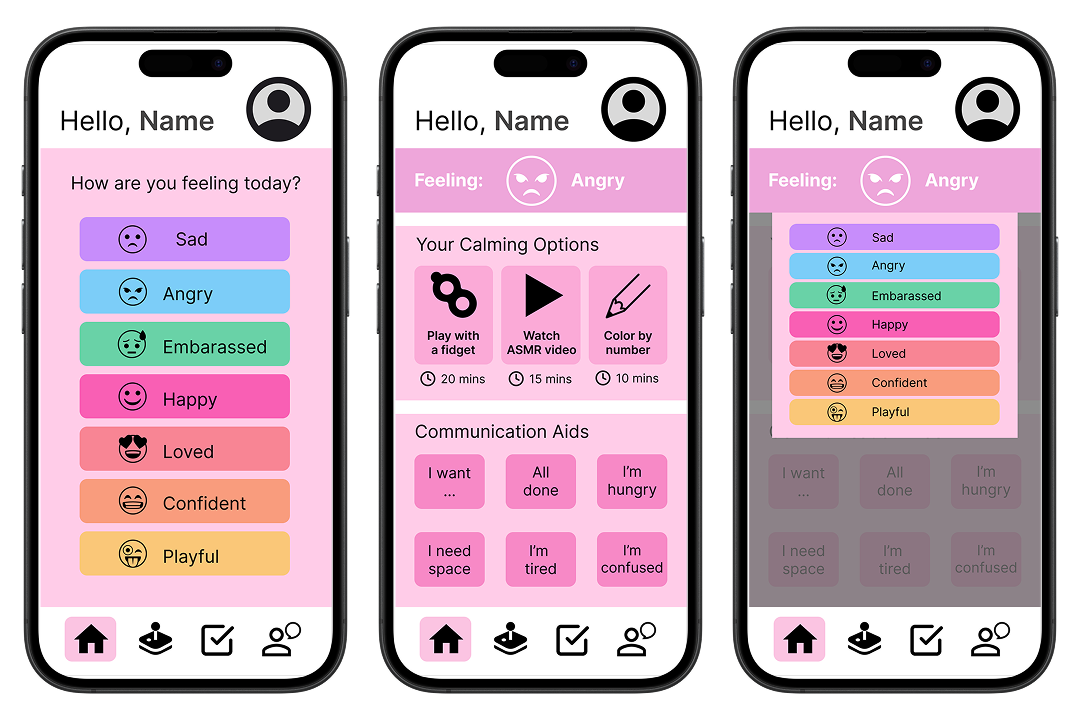
The mobile app prototype introduces customizable interaction patterns and guided tools that strengthen routine management, emotional awareness, and independent decision-making in everyday situations.
I chose the topic of accessibility as my individual senior capstone / passion project to round out my academic career.
This project was inspired by a student I taught dance to for 5 years and saw grow through a newfound form of communication through dance. Prior to beginning dance, my student's mother approached me to explain her ASD diagnosis and her struggles with verbal communication. But, her determination to engage with her classmates and a new activity pushed her past the confines of her diagnosis and was vital in challenging her personal barriers to communication. I also had the honor of creating and leading an adaptive dance class for children with neurodevelopmental disabilities that used assistive technology, which is the basis for this project.
Improving assistive and accessible technology, practices, and standards became a passion of mine after learning about the daily battles these children face and the weaknesses of assistive tools that currently exist.


The goal of this project was to design an accessible, customizable communication tool that helps verbal children with ASD express emotions, manage daily routines, and build independence. The app reduces cognitive and emotional barriers by providing structured tools for self-expression, emotional awareness, and task organization. The solution encourages confidence and consistency while helping children feel understood and capable in challenging moments.
This project focused on verbal children with Autism Spectrum Disorder (ASD), ages 10–15. Through interviews with parents, caregivers, and professionals, alongside secondary research, I identified a significant gap in resources designed specifically for this group. Because verbal children can communicate in ways that appear typical, their needs are often overlooked, leaving them without tools that support emotional regulation and communication in a way that feels natural and age-appropriate.
The final deliverable was a mid-fidelity mobile app prototype that supports emotional communication and self-regulation for verbal children with ASD. The design draws inspiration from communication devices used by nonverbal children but adapts these tools for verbal users who often lack similar resources. Insights from research informed each interaction, ensuring the experience aligns with real-world needs and therapeutic techniques.
In order to better understand my users, I researched the development, diagnosis and implications of ASD, the current state of assistive technology, and the designs/strategies of adapted classrooms. One of the main resources was the DSM-5 (Diagnostic and Statistical Manual of Mental Disorders), which provided a scientific understanding of the severity levels and “criteria” for ASD. In order to ensure I was collecting diverse data, I also read academic journals, scientific studies, and online blogs.
This research established an understanding of what makes physical communication tools effective for neurodiverse learners. It validated the use of familiar therapeutic and classroom methods, such as communication cards, checklists, and guided routines as the foundation for customizable digital experiences, ensuring continuity, comfort, and user confidence.
To understand the needs of children with ASD and their support networks, interviews were conducted with two parents and one ABA therapist. Each stakeholder received an overview of the project scope, planned design activities, and follow-up opportunities for future testing and feedback. Professional input informed early low-fidelity concepts.
Stakeholders consistently emphasized autonomy, emotional regulation, and adaptable communication systems, uncovering a gap in accessible, context-aware assistive tools. These insights shaped the foundation of the app’s customizable interface, prioritizing independent use, personalized setup, and embedded communication aids that adapt proven physical supports into a flexible digital environment built by and for the user.
To incorporate user perspectives directly into the design process, I facilitated a diary-keeping activity with a parent prior to participatory prototyping with their child. This allowed parents to observe daily interactions with adaptive tools and surface insights ahead of our session. During prototyping, children used their existing communication cards to express preferences and reactions when verbal communication was challenging.
Participant feedback highlighted moments of confusion, emotional overload, and communication barriers, reinforcing the need for multimodal interaction and ways to express needs without verbal language. These activities inspired a focus on recognizing and managing emotional states within digital contexts, resulting in features like guided setup sequences, customizable phrase buttons, and nonverbal expression options.