
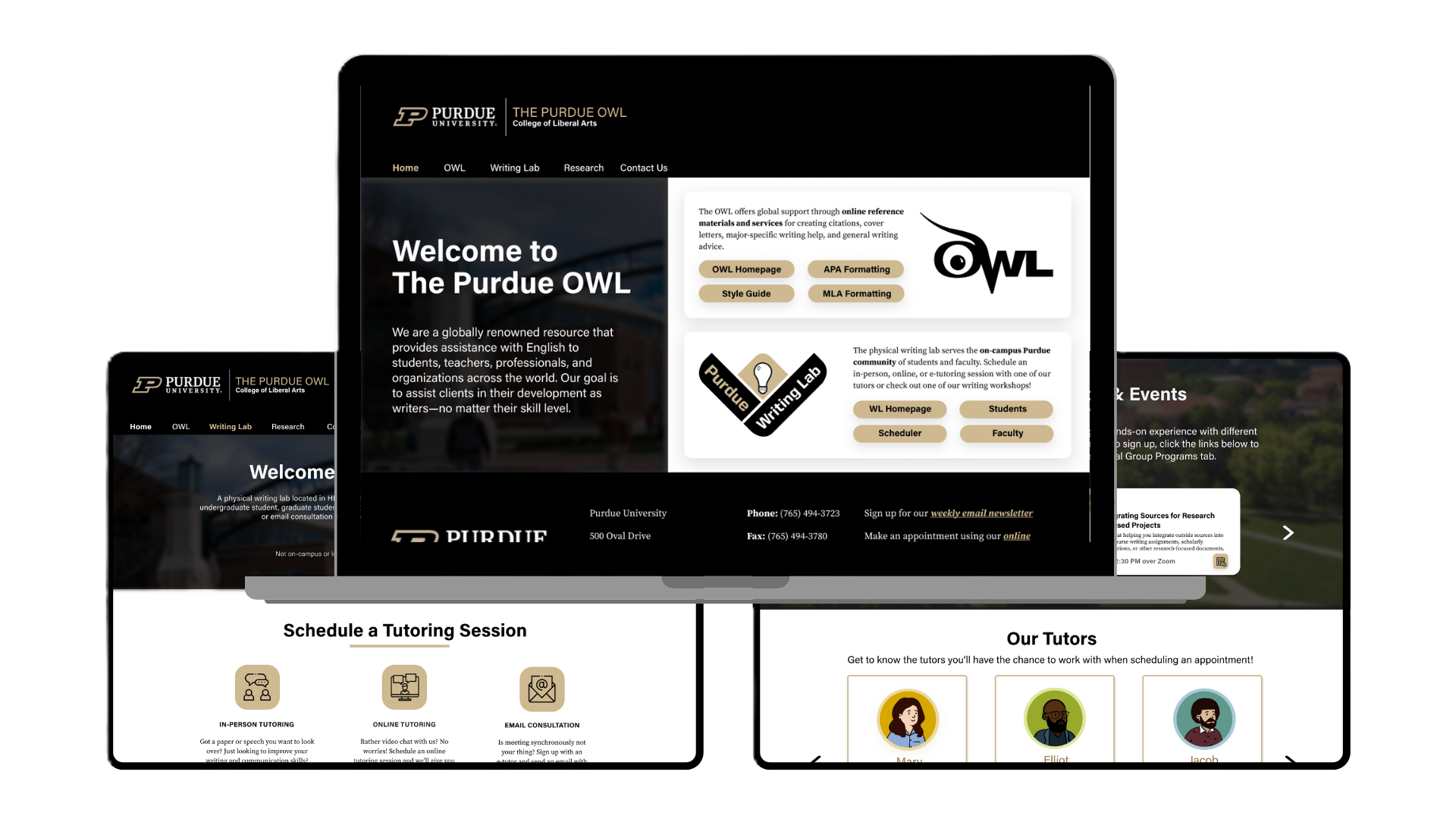
The Purdue Online Writing Lab (OWL) is a globally accessed academic writing resource supporting students, educators, and researchers. It operates alongside Purdue’s On-Campus Writing Lab, which provides in-person tutoring and academic support services. With approximately 70 million users, the OWL generated substantial analytics data but lacked the insight required to meaningfully interpret user experience quality. Website user retention required improvement, and most students were unaware of available in-person Writing Lab services.
The objective was to translate quantitative data into actionable design recommendations and create a more cohesive, research-informed ecosystem for both sites.
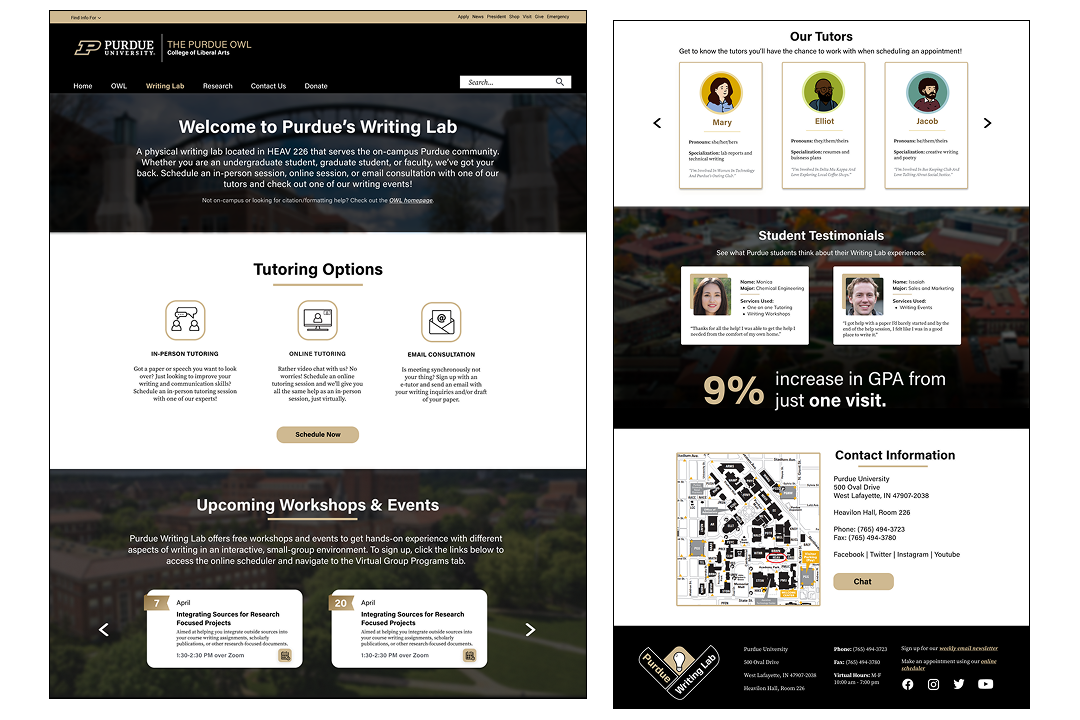
The redesign strengthens accessibility standards, simplifies the OWL site hierarchy, and establishes clearer visual separation between the OWL and the On-Campus Writing Lab, improving resource discovery and awareness of available support services.
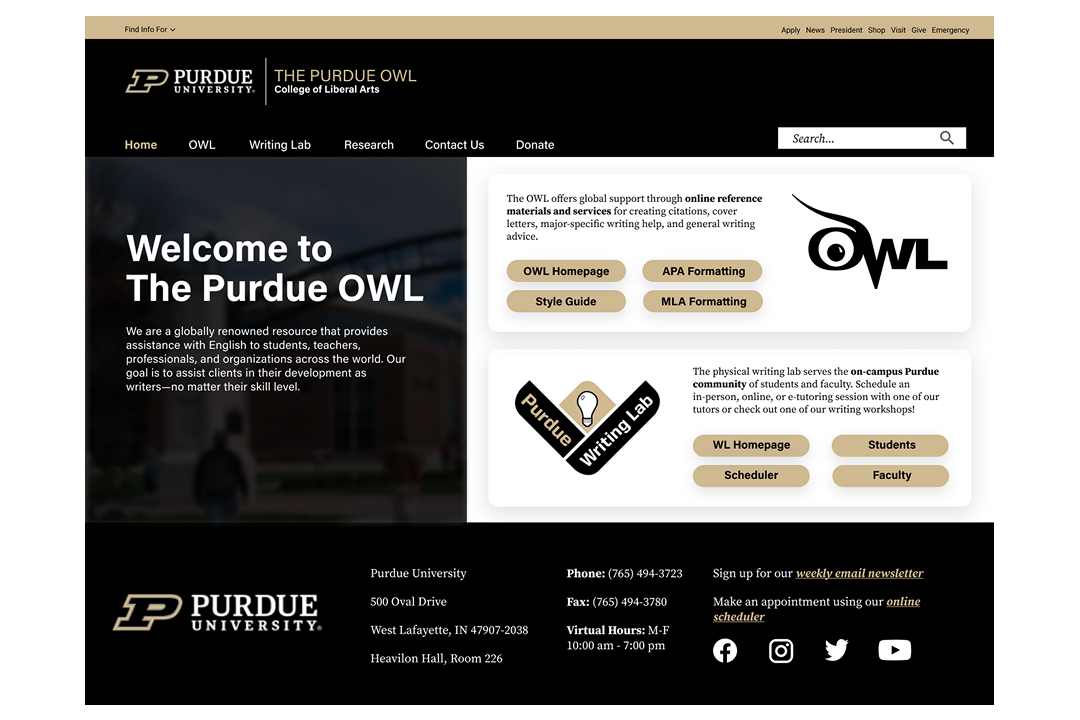
OWL Homepage
OWL Content Landing Pages

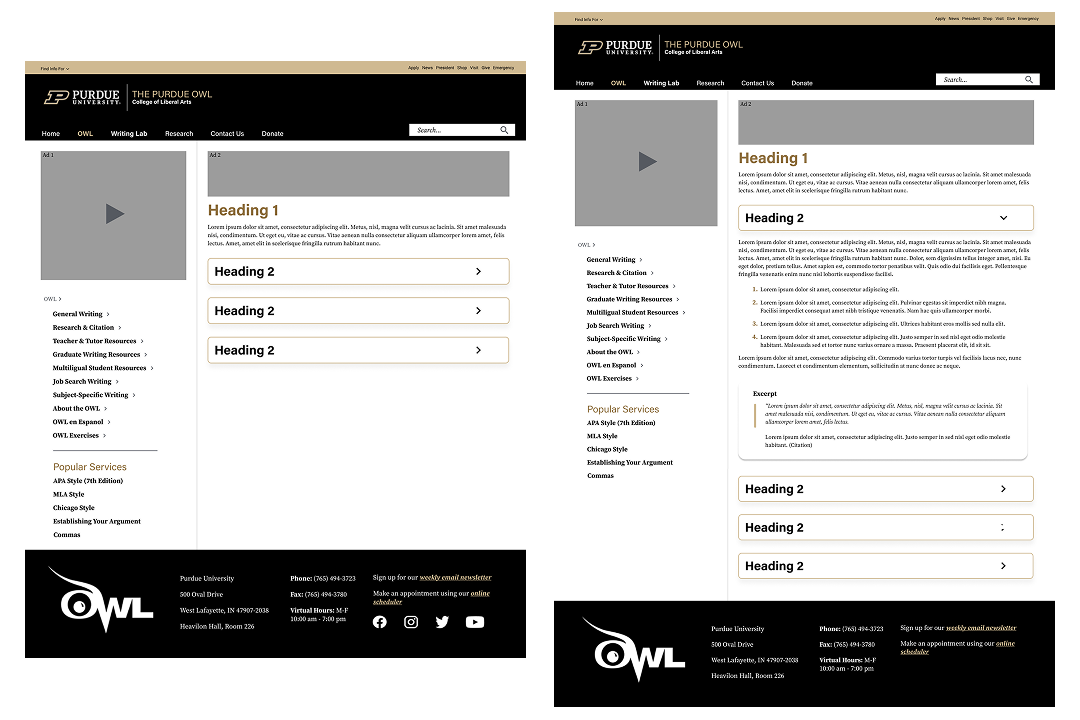
The goal of this project was to improve the usability and clarity of Purdue’s writing resources by redefining how information is structured and presented across the Purdue OWL and On-Campus Writing Lab websites. What began as an effort to distinguish the two platforms evolved into a broader redesign that emphasized clearer visual hierarchy, streamlined navigation, and stronger promotion of on-campus services to increase awareness and engagement among Purdue students.
The redesign served two key user groups: Purdue students and the global OWL community of teachers, students, and researchers. For OWL users, improved navigation and visual hierarchy enhanced readability, accessibility, and overall site usability. For Purdue students, these same design updates clarified how to access the On-Campus Writing Lab's services, creating a cohesive experience that better connects with both audiences.
The final deliverable is a redesigned website experience that prioritizes accessibility, simplified navigation, and clearer pathways to find relevant resources. The proposed flow aimed to visually separate the two sites, condense and organize the OWL site hierarchy, and to highlight the Writing Lab’s consultation tools to ensure all students can easily find the right support for their writing needs.